
Modern healthcare in the United Arab Emirates is increasingly fast-paced, yet the patient experience remains surprisingly fragmented. For many residents, navigating the healthcare system means juggling disconnected touchpoints: booking an appointment through a phone call, getting lab results through a separate clinic portal or PDF attachment, keeping track of paper prescriptions, and trying to remember past medical history when visiting a new specialist. Clinics comparing patient portal UAE should look closely at daily workflow support.
Meanwhile, medical clinics face their own operational bottlenecks, from heavy phone traffic and missed appointments to repetitive administrative work that strains front-desk staff. Reliable patient portal UAE depends on data security and local compliance. For first-time users, patient portal UAE is often the easiest place to start. Keep these points in mind when reviewing patient portal UAE for your own situation.
A well-designed patient portal UAE solution can bridge this gap, bringing important parts of the healthcare journey into a single digital experience. However, not all platforms are built the same. Whether you are a patient choosing a healthcare platform or a clinic evaluating digital infrastructure, specific features separate a genuinely useful patient portal from a basic appointment-booking website. A clear view of patient portal UAE makes the next decision easier.
This guide provides a comprehensive evaluation framework for patient portals in the UAE, examining what patients need, what clinics must look for, and how both sides benefit from connected digital healthcare. Before choosing patient portal UAE, compare how each provider handles follow-ups. Ask providers how patient portal UAE handles urgent questions and reminders. Teams that understand patient portal UAE early avoid most avoidable delays.
Table of Contents
What Is a Patient Portal in the UAE?
What is a patient portal? A clear view of patient portal UAE helps patients plan their care with confidence.
A patient portal is a secure digital platform that allows patients to access selected healthcare services and information, such as appointments, medical records, laboratory results, and communications, via web or mobile interfaces. Clear instructions make patient portal UAE easier to use for every family.
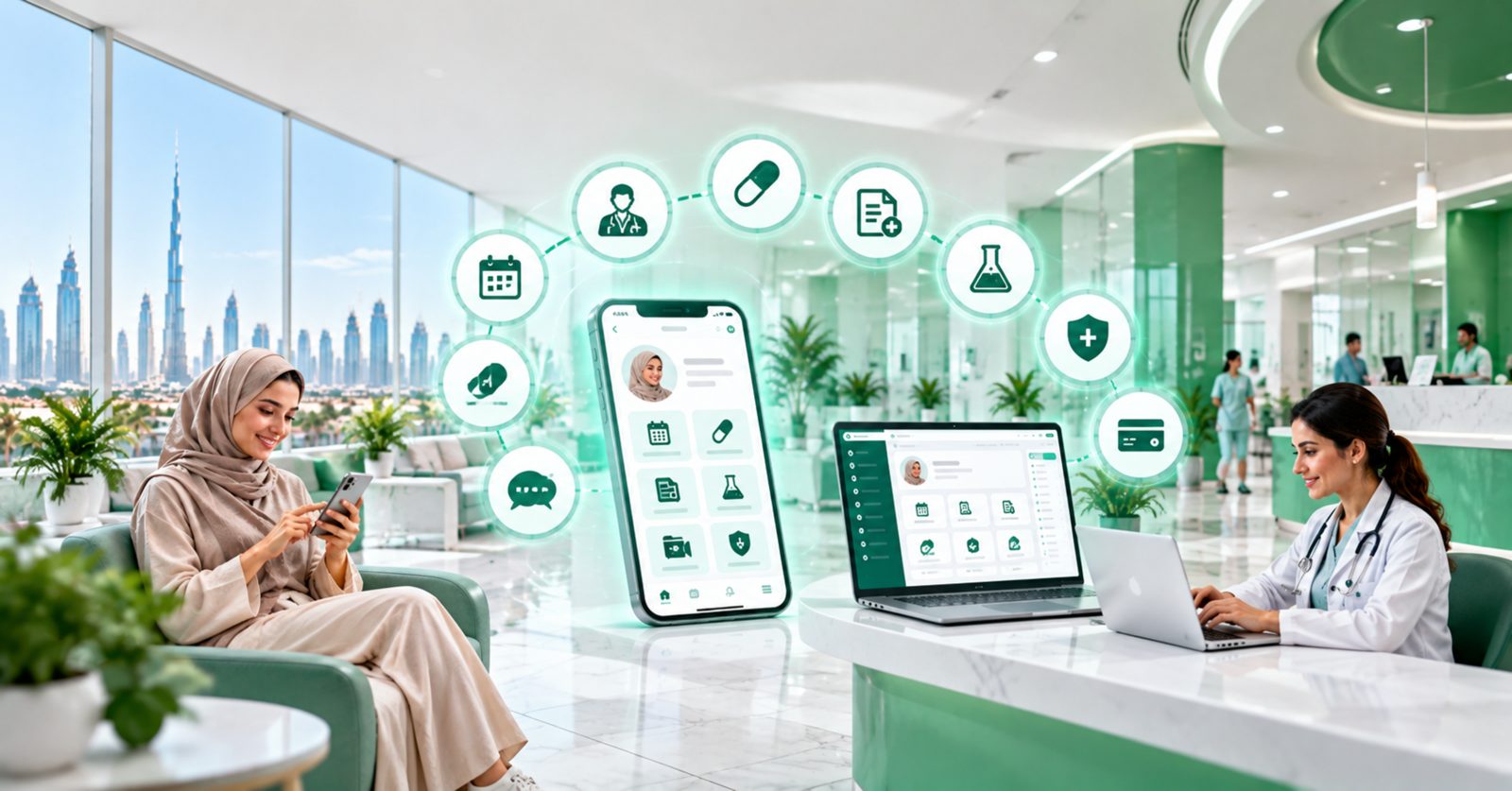
A patient portal acts as a digital bridge between patients and healthcare providers. In the UAE, major providers have pioneered this approach—for instance, Cleveland Clinic Abu Dhabi provides a comprehensive patient portal where users can access medical records, schedule appointments, and view test results in one centralized location. A clear view of patient portal UAE helps patients plan their care with confidence. Review patient portal UAE against your own requirements before you commit.
Patient Portal vs. EMR: What’s the Difference?
It is important to distinguish a patient portal from an Electronic Medical Record (EMR) or Electronic Health Record (EHR): Monitoring patient portal UAE updates helps patients stay on top of their care. Good planning around patient portal UAE saves time and cost later.
- EMR / EHR: The clinical backend system used by doctors, nurses, and administrators to record medical histories, diagnostic notes, and clinical workflows.
- Patient Portal: The patient-facing frontend interface that safely exposes appropriate, relevant health information and administrative tools without granting unrestricted access to internal hospital systems.
Why Are Patient Portals Becoming More Important in the UAE?
The push toward digital health infrastructure in the UAE is driven by three distinct perspectives: Many patients check patient portal UAE options before booking their next visit.
- For Patients: Greater convenience, 24/7 access to medical data, higher transparency, and a reduction in administrative friction across different providers.
- For Clinics: Reduced phone-heavy workloads, streamlined appointment scheduling, automated follow-ups, and improved patient engagement between visits.
- For the Broader Healthcare System: National and emirate-level initiatives are increasingly interconnecting healthcare data. Abu Dhabi’s Sahatna service gives residents access to unified medical information through Malaffi, while Riayati connects healthcare providers across other regions to facilitate secure health information exchange (HIE).
10 Patient Portal Features Patients & Clinics Should Look For
1. Online Appointment Booking and Management
- What patients need: Doctor and specialty search filters, real-time available time slots, instant confirmation, and the ability to reschedule or cancel appointments seamlessly.
- What clinics need: Real-time schedule synchronization, reduced phone call volumes, automated booking confirmations, and minimized no-show rates.
2. Digital Lab Results
- What patients need: Instant notifications when reports are ready, secure online viewing, and options to download, print, or share results with other specialists.
- What clinics need: Automated report delivery pipelines, accurate patient matching to prevent errors, and secure access controls.
- Read more about how to access online lab results in the UAE.
3. Access to Medical Records
- What patients need: Meaningful visibility into past appointments, historical reports, and medication histories.
- Note: Availability depends on provider system integration and local consent regulations governed by initiatives like Riayati.
4. Secure Patient–Doctor Communication
- What patients need: Safe, direct channels for non-urgent administrative queries and follow-up communication.
- What clinics need: Messaging controls that reduce unnecessary clinic calls without creating unmanageable clinical workloads or blurring lines with emergency care.
5. Notifications and Reminders
- What patients need: Automated SMS or push notifications for upcoming appointments, status changes, and lab availability.
- What clinics need: Proactive tools that cut down missed appointments and automate routine communication.
6. Doctor and Clinic Discovery
- What patients need: Advanced filtering based on medical specialty, geographic location, language, consultation fees, and insurance network compatibility.
- Explore how to book a doctor online in Dubai or Sharjah.
7. Clear Pricing and Insurance Information
- What patients need: Upfront visibility regarding consultation costs, accepted insurance networks, and straightforward payment processing.
- What clinics need: Better alignment with insurance workflows to reduce billing confusion at the front desk.
8. Privacy and Security
- What patients need: Transparency over who accesses their data, robust account protection, and clear privacy policies.
- What clinics need: Role-based access controls, comprehensive audit trails, and strict adherence to UAE data protection frameworks (such as the UAE Personal Data Protection Law – PDPL).
9. Integration and Interoperability
- What clinics need: Seamless interoperability between the patient portal and existing EMRs, billing software, and regional health information exchanges like Malaffi or NABIDH, ensuring the platform doesn’t become another isolated data silo.
10. Simple, Accessible User Experience
- What patients need: A clean, clutter-free interface optimized for mobile, tablet, and desktop use.
- What clinics need: Low onboarding burdens and minimal staff training requirements.
What Should Patients Look for in a UAE Patient Portal? (Checklist)
- Easy appointment booking across preferred specialties and locations
- Instant lab report access with downloading and sharing capabilities
- Organized medical history and appointment tracking
- Reliable reminders via SMS, email, or app notifications
- Upfront fee transparency and transparent service costs
- Insurance compatibility visibility to check network coverage
- Strong privacy controls over personal health data
- Responsive mobile and web design for on-the-go access
What Should Clinics Look for in a Patient Portal? (Checklist)
- Robust EMR/clinic-system integration to sync schedules automatically
- Patient self-service capabilities to minimize routine front-desk phone calls
- Automated notification workflows to reduce patient no-shows
- Secure digital lab distribution tied safely to patient profiles
- Controlled patient-clinic communication channels
- Role-based access management for administrative and medical staff
- Analytics and operational reporting on patient engagement
- Scalability across multi-branch clinics or enterprise networks
Patient Portal vs. Patient App vs. EMR
| Technology | Primary User | Core Function |
| Patient Portal | Patient | Web- or app-based interface to view records, book appointments, and check lab results. |
| Patient App | Patient | A dedicated mobile application optimized for smartphones offering push notifications and quick access. |
| EMR / EHR | Clinician / Staff | Internal clinical software used to manage patient charts, clinical notes, and hospital workflows. |
How Care by Freit Approaches the UAE Patient Portal
Care by Freit positions itself as a centralized digital healthcare platform designed to streamline the modern UAE healthcare experience (care.freit.io). Rather than forcing patients to manage separate apps for every clinic or lab, Care by Freit brings core healthcare interactions into a single ecosystem: Reviewing patient portal UAE with a family doctor helps keep plans simple.
- Centralized Dashboard: A unified patient dashboard for tracking appointments, test results, and ongoing medical activity.
- Appointment Management: Real-time doctor discovery, specialty filtering, booking, rescheduling, and automated reminders.
- Digital Lab Reports: Secure access to view, download, print, and share diagnostic test results.
- Clinic Discovery: Connecting patients directly with participating healthcare providers and clinics across the UAE.
- Expanding Services: Future-focused features including integrated pharmacy ordering to further bridge the gap between diagnosis and treatment.
Frequently Asked Questions
What should a patient portal include?
At a minimum, evaluate appointment management, healthcare information access, secure communication, automated notifications, data security, ease of use, and integration capabilities. Regular reviews of patient portal UAE reveal gaps that are easy to miss.
Is a patient portal the same as an EMR?
No. An EMR is a clinical record system used by medical professionals, while a patient portal is the patient-facing interface providing access to selected personal health information and services. Well planned patient portal UAE routines reduce delays at busy clinic hours.
Are patient portals secure?
Security depends on the platform’s design, encryption standards, authentication protocols, and compliance with regional regulations like the UAE PDPL. Clinics and patients should always verify security practices prior to adoption. Patients benefit when patient portal UAE is easy to find and simple to use.
Can I see lab results through a patient portal?
Yes. Many advanced portals such as those used by major health institutions and platforms like Care by Freit allow patients to view, download, and share lab reports digitally. Experienced patients treat patient portal UAE as part of their ongoing health routine.
Can clinics use a patient portal to reduce administrative work?
Yes. By enabling patient self-service for appointment booking, cancellations, and report retrieval, clinics can significantly lower front-desk phone traffic and administrative overhead. Good patient portal UAE services keep patients informed at every step.
Take the Next Step
- For Patients: Ready to take control of your health journey? Explore Care by Freit to find doctors, book appointments, and manage your healthcare activity from one digital platform. Or, if you need immediate care, book a doctor online today.
- For Clinics: Interested in upgrading your practice’s digital infrastructure? Bring your clinic into the digital healthcare journey with Care by Freit’s provider solutions.
Clinics comparing patient portal UAE should look closely at daily workflow support. A simple checklist for patient portal UAE can prevent costly mistakes.